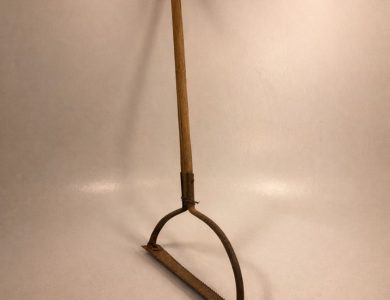
Anyone know what these could be? Visiting some old family relatives and they don’t know what they were for either.
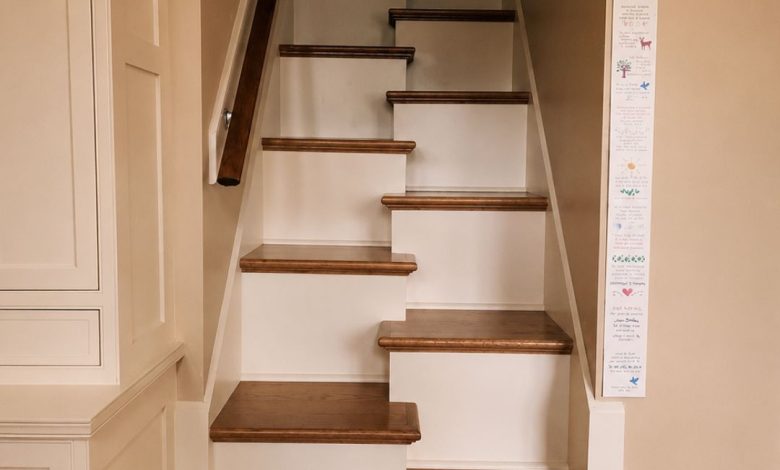
At first glance, these stairs look like a construction mistake. The steps do not line up like a normal staircase. Instead, they follow an alternating tread design, meaning each step is offset so the climber places one foot on one side, then the other foot on the opposite side.
This unusual design is commonly known as “Witches’ Stairs.” The more technical name is alternating tread stairs or alternating step stairs.
When did Witches’ Stairs appear?
There is no confirmed single date of origin for this design. They are most often associated with older homes, barns, lofts, and tight interior spaces, especially in places such as New England. The idea likely developed as a practical solution for buildings where there was not enough room for a full staircase.
What were they used for?
The main purpose of Witches’ Stairs was space-saving efficiency. In narrow or steep areas, a regular staircase would take up too much floor space. Alternating tread stairs allowed people to reach an upper floor, attic, or loft while using much less room.
Because each step is shaped for a specific foot, the staircase forces the user to climb in a certain rhythm. This makes it feel strange at first, but it also helps the stairs work in a very steep space.
Why are they called “Witches’ Stairs”?
According to folklore, witches supposedly could not climb these stairs because of the unusual alternating pattern. This led to the belief that the stairs offered a kind of supernatural protection for the home.
However, there is no solid historical evidence proving that these stairs were built to stop witches. That story is best understood as local legend, not confirmed fact.
The real reason behind the design is practical, not magical. Witches’ Stairs were created to solve a building problem: how to fit stairs into a place where normal stairs would not work.
Today, these staircases are rare, but surviving examples remain fascinating. They show how everyday architecture can become connected with mystery, folklore, and clever design. What looks like a strange staircase is actually a smart solution from the past—one that later gained a haunting name.