Do you remember any family member having doilies?
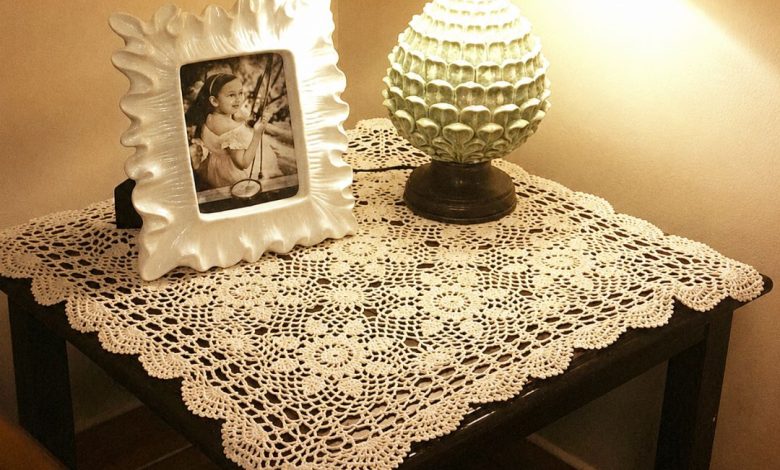
For many Americans, the sight of a white lace mat on a side table brings back memories of a grandmother’s living room, a lamp glowing in the corner, and framed family photos carefully arranged on polished wood. The item in the photo is called a doily — plural: doilies.
A doily is a small decorative mat, usually made of cloth, lace, crochet, or paper. It was often placed under lamps, picture frames, vases, bowls, teacups, cakes, or candy dishes. Merriam-Webster defines it as a small napkin or a small decorative cloth or paper used to protect furniture surfaces.
When did doilies first appear? The word “doily” comes from Doiley or Doyley, the name of a 17th-century London draper. At first, the word referred to a woolen material used for summer clothing. By the early 18th century, the meaning shifted toward the small ornamental napkin or mat we recognize today.
The familiar openwork lace doily became especially popular during the Victorian era, when decorative needlework and crochet were common household skills. As cotton thread became more widely available in the 19th century, crocheted doilies became a common handmade item in many homes.
What were doilies used for? They were not just decoration. Doilies helped protect wooden furniture from scratches, stains, and marks left by dishes, lamps, or vases. They also made a table setting look more formal and “finished.” Paper doilies were often used under cakes, sandwiches, pastries, or desserts to make food presentation look prettier.
In mid-century American homes, doilies often appeared on coffee tables, nightstands, dressers, dining tables, and end tables. A handmade doily showed patience, skill, and care. Many were made by mothers, grandmothers, aunts, or church craft groups, then passed down through families.
Today, some people see doilies as old-fashioned. But that misses the deeper meaning. A doily was a small symbol of home pride, hospitality, and handmade beauty. It protected the furniture, dressed up the room, and quietly said: someone cared enough to make the house feel warm and welcoming.