We found this when we were cleaning out my late grandpa’s home. We have no idea what it is and we’re so curious. Any ideas?
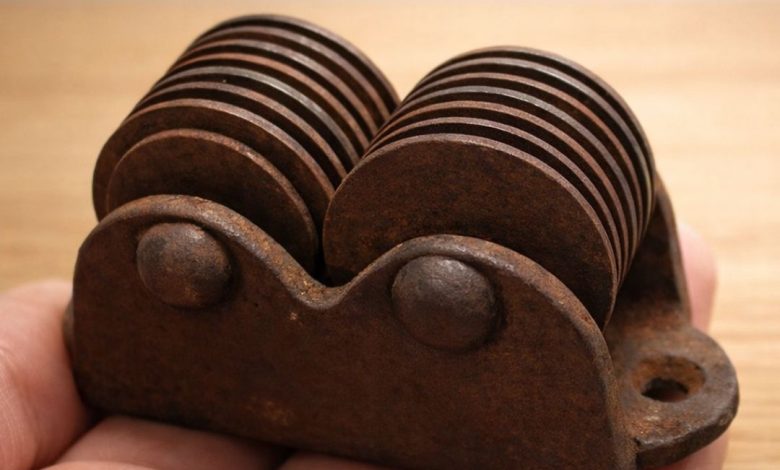
The Vintage “Jiffy” Knife Sharpener is a handheld, pull-through sharpening tool best known for its simple, quick technique: you draw the knife through the sharpener so the internal steel revolving wheels contact the blade and refresh the cutting edge. Period advertising shows it positioned as an easy-to-use, efficient sharpener for stainless knives.
Official Name
- Name on the item: “Jiffy Knife Sharpener”
- Many surviving examples are stamped/engraved “Made in England”, which has become a key identifier for collectors.
When It Appeared
- The Jiffy sharpener is documented in a newspaper advertisement dated April 21, 1953 (The West Australian), indicating it was already being commercially sold by the early 1950s.
- Vintage listings commonly place the tool in the 1950s era, consistent with that advertising record.
Who Created It
- The tool is associated with the “Jiffy” brand and manufactured in England (as marked on the product).
- Important note: widely circulated examples and period-style listings typically do not consistently identify a specific named inventor or manufacturer beyond the Jiffy branding and Made in England marking.
What It Was Used For
The Jiffy sharpener’s purpose was straightforward: restore cutting performance to everyday kitchen knives, especially stainless steel knives, using a fast, repeatable motion.
How It Worked (Simple Explanation)
The 1953 advertisement describes the core mechanism and method:
- Sharpening mechanism: steel revolving wheels
- Method: draw the knife through the wheels several times
- Result: a “keen edge” (sharper cutting edge)
Typical Step-by-Step Use
- Stabilize the sharpener (hold it firmly by the handle).
- Insert the blade into the sharpening opening/guide.
- Pull the knife through in a smooth motion (heel to tip).
- Repeat a few passes until the edge improves (avoid excessive force).
- Wipe the blade afterward to remove any fine metal particles.
Why It Mattered in Its Time
- Speed and convenience: Designed for people who wanted a functional edge without stones or specialized technique.
- Everyday practicality: Marketed as suitable for stainless knives, which were increasingly common in mid-century kitchens.
Collecting and Care Tips
- Look for markings: “Jiffy Knife Sharpener” and “Made in England” are commonly cited identifiers.
- Check the mechanism: wheels should turn freely without severe wobble.
- Preserve the handle: many examples feature a bright, vintage-style handle; condition affects collectability.
- Cleaning: use a soft brush and mild cleaner; avoid soaking if the handle or internal assembly could trap moisture.
Best-Use Guidance (Modern Context)
- Great for utility kitchen knives where convenience matters.
- Use extra caution with premium, thin, or very hard blades (aggressive pull-through systems can remove more material than necessary).