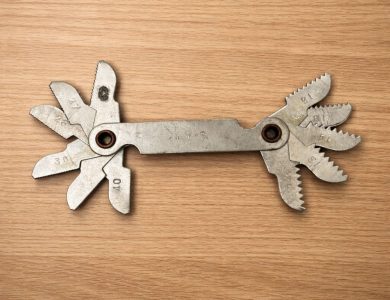
This handled tool has a spring and a screw on the top. Looks pretty heavy duty. Think you know what this was used for?
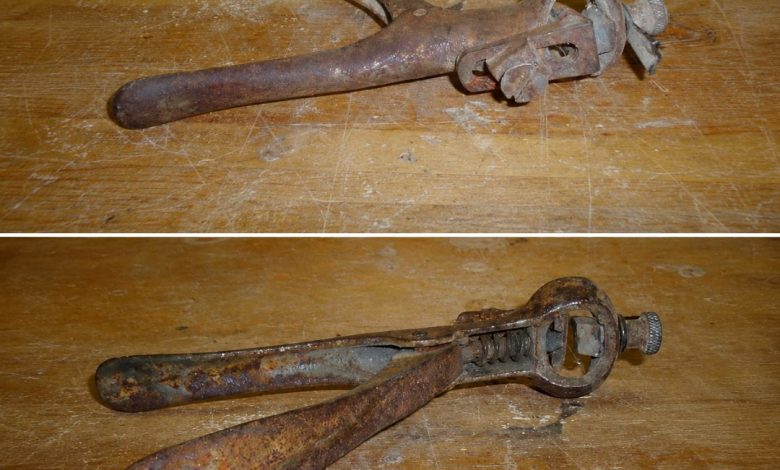
The rusty metal tool shown in the photo is a saw tooth setter, also called a saw set. It was not used to cut wood directly. Instead, it was used to adjust the tiny teeth along a saw blade so the saw could cut smoothly, straight, and without getting stuck.
Time period: Tools like this were especially common in woodworking shops, farms, and repair benches during the late 19th and early 20th centuries. Saw-setting tools had already developed in many forms by the 19th century, and more advanced hand-operated versions became widely used as saw maintenance became more standardized.
What it was used for: A saw works best when its teeth are not perfectly flat in one line. Instead, the teeth are slightly bent outward in alternating directions. This outward bend is called the “set” of the saw. The set makes the cut slightly wider than the blade itself, which helps prevent the saw from binding or sticking in the wood.
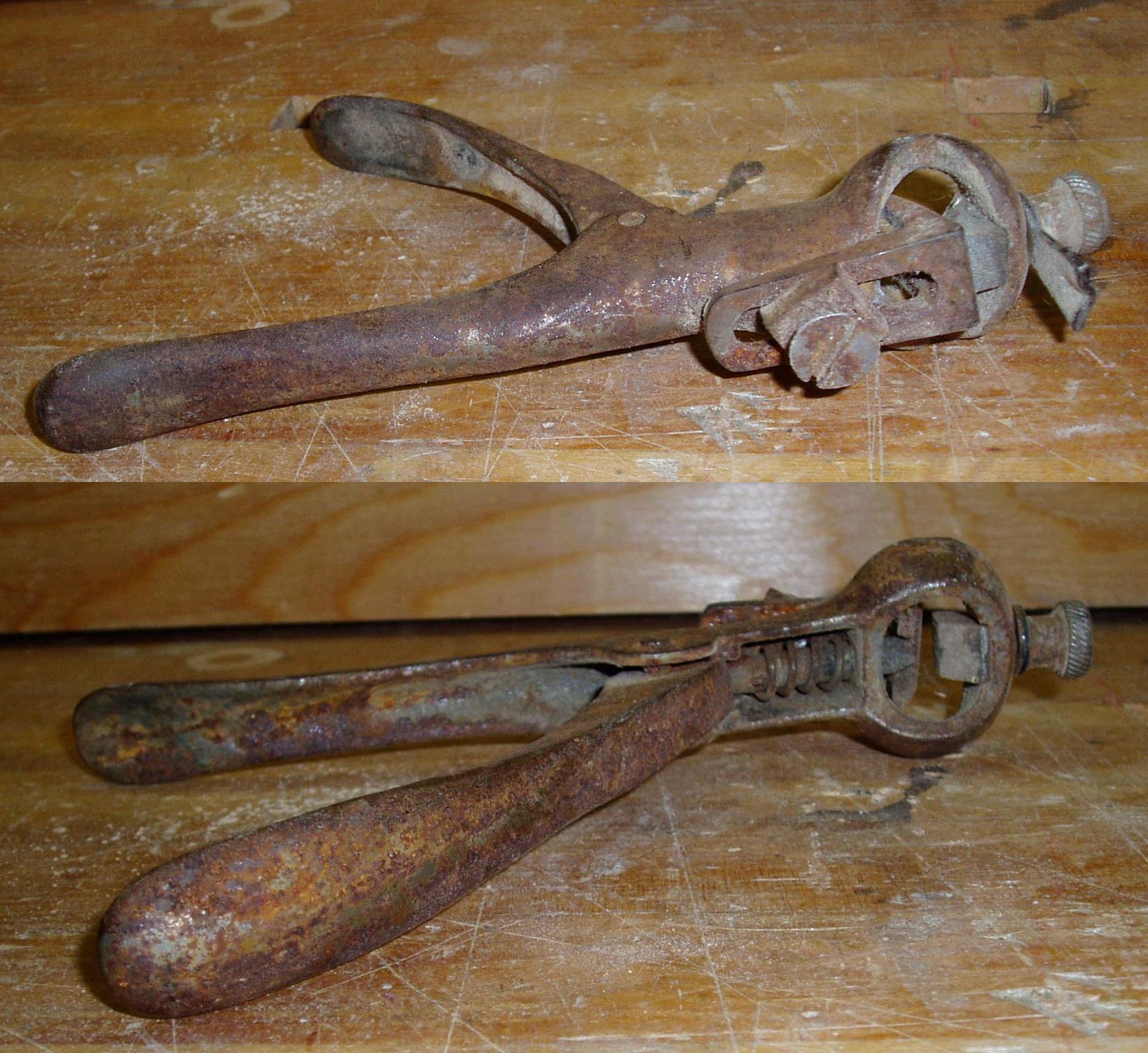
This tool helped craftsmen repair, tune, and maintain hand saws. After a saw was sharpened, its teeth often needed to be reset. The saw tooth setter allowed the user to bend each tooth at a controlled angle, making the saw cut more evenly.
How it worked: The worker would place the saw blade into the tool and squeeze or press the handles. The mechanism would push one tooth slightly outward. Then the user would move to the next tooth, usually setting the teeth in an alternating pattern—one tooth angled left, the next angled right.
Why it mattered: Before disposable blades and modern power tools became common, a good saw was expected to last for years. A tool like this helped woodworkers keep their saws sharp, accurate, and useful. In that sense, the saw tooth setter was a small but important part of everyday craftsmanship.
In simple terms: this antique tool was a saw maintenance device. Its job was to make sure the teeth of a hand saw were bent “just right,” so the blade could cut wood cleanly without jamming.