Are there still those of us around that know what this is?
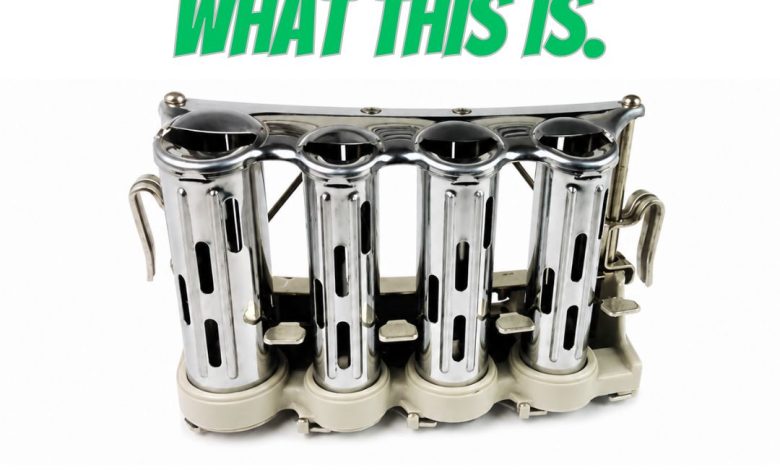
Before digital payments, credit card readers, and smartphone apps, many workers had to handle coins quickly and accurately by hand. One of the most practical tools from that era was the McGill High Speed Coin Changer, also known as a belt-mounted coin dispenser or coin changer.
The item shown in the photos is a Vintage McGill High Speed 4-Barrel Coin Changer, marked as Made in the USA and distributed by J. L. Galef of New York. It was designed to hold and dispense different coin denominations with speed and precision.
What Is It Called?
This device is commonly known as a McGill High Speed Coin Changer. Because it has four vertical coin tubes, collectors may also describe it as a 4-barrel coin dispenser or belt coin changer.
Each metal cylinder held a stack of coins. By pressing the small levers near the bottom, the user could release coins one at a time. This made it much faster than digging through a pocket, cash box, or coin purse.
When Was It Used?
Coin changers like this were especially common in the mid-20th century, roughly from the 1930s through the 1960s, though similar devices remained in use later in some jobs.
They were popular during a time when everyday transactions were heavily cash-based. Small coins mattered much more than they do today because bus fares, newspapers, snacks, parking, and vending items often cost only a few cents.
What Was It Used For?
The main purpose of the McGill High Speed Coin Changer was simple: to help workers make change quickly.
It was commonly used by people such as:
Bus drivers and streetcar conductors
Taxi drivers
Movie theater attendants
Vending machine route workers
Delivery workers
Carnival and concession stand employees
Cashiers in busy small businesses
The device could be clipped or mounted to a belt, keeping coins within easy reach. Instead of counting loose change by hand, the worker could press a lever and dispense the needed coins almost instantly.
How It Worked
The four upright metal tubes were used to store different coin sizes. In many examples, each tube would hold a separate denomination, such as pennies, nickels, dimes, and quarters.
The long vertical slots on the front allowed the user to see how many coins remained inside. The bottom levers released the coins. The curved metal frame and side hooks helped the unit sit securely on a belt or work station.
This design was simple, mechanical, and durable. That is one reason many examples still survive today.
Why People Remember It
For older Americans, this object may bring back memories of riding buses, paying cash fares, buying tickets, or watching workers make change with impressive speed. The sound of coins dropping from a changer was once a familiar part of daily life.
For younger people, however, the object can look mysterious. Without context, it almost resembles a small machine part or an unusual kitchen gadget. That is why images of these coin changers often appear online with captions like “90% have no idea what this is.”
Why It Matters Today
The McGill High Speed Coin Changer is more than an old metal tool. It represents a time when American commerce depended on speed, trust, and manual skill. Workers had to count quickly, stay accurate, and keep lines moving without electronic registers doing the work for them.
Today, these coin changers are collected as pieces of vintage Americana, especially by people interested in transportation history, old retail equipment, bus memorabilia, and antique cash-handling tools.
A Small Tool With a Big Role
The Vintage McGill High Speed Coin Changer may look strange at first, but it was once an essential everyday device. It helped countless workers make change faster, serve customers better, and keep business moving in a cash-driven world.
In an age when many people pay with a tap of a phone, this little belt-mounted coin dispenser reminds us how much ordinary life has changed—and how clever simple mechanical tools could be.