Do you know what this strange object is?
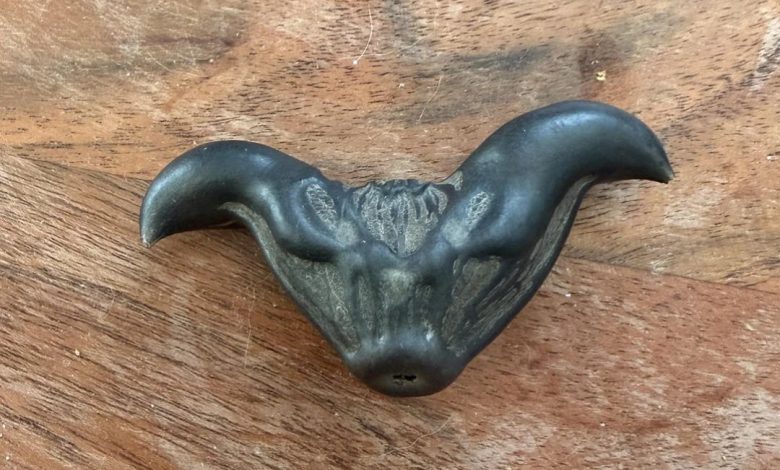
The object in the photo appears to be a dried water caltrop, a horned aquatic fruit from plants in the genus Trapa. In the United States, it may also be called water chestnut, water nut, buffalo nut, bat nut, devil pod, or singhara nut. One important note: this is not the same as the crunchy canned “Chinese water chestnut” often used in stir-fries; that common kitchen ingredient comes from a different plant, Eleocharis dulcis.
Water caltrop is not a man-made tool or toy. It is the natural fruit of a floating freshwater plant that grows in ponds, lakes, marshes, and slow-moving rivers. The plant produces hard, dark, horned fruits, and each fruit contains one large starchy seed inside. Its unusual shape is why many people think it looks like a bat, bull’s head, or small horned mask.
When did it appear? Since this is a plant, it was not “invented.” Historically, water caltrop has been known and cultivated for thousands of years, especially in China and India, where it has long been valued as a food crop. Some sources note that varieties of Trapa have been cultivated in those regions for at least 3,000 years.
What was it used for? The main use of water caltrop is food. After cooking, the seed inside can be eaten as a snack, added to dishes, or dried and ground into flour. In parts of Asia, it has been used in porridges, flatbreads, fritters, desserts, and festival foods. The seed is starchy, mildly sweet, and filling.
In America, however, water caltrop is often discussed for a different reason: it can become an invasive aquatic plant. The species Trapa natans is native to Eurasia and Africa, but it was introduced to the United States in the 1870s, likely as an ornamental water-garden plant. In many waterways, it can form thick floating mats that crowd out native plants and interfere with boating, fishing, swimming, and water quality.
In simple terms: this odd-looking object is an ancient edible water nut with a dramatic shape. In Asian food history, it is a useful crop. In many parts of the United States, the plant is better known as a troublesome invasive species. The key fact Americans should remember is: water caltrop may be called “water chestnut,” but it is different from the familiar Chinese water chestnut sold in cans.